Salmon
Paprika
Hamburger
Raspberry ice cream
Strawberries
Croissants
Coffee beans

Cibus Nexum Blog

Plant-Based Manufacturing in Dairy: Embracing Innovation and Overcoming Challenges

Plant-Based Man­u­fac­tur­ing in Dairy: Em­brac­ing In­no­va­tion and Over­com­ing Chal­lenges

Introduction: The Rise of Plant-Based Dairy AlternativesAs the world leans towards sustainability and health-conscious choices, the dairy industry stands at a pivotal crossroads. The traditional focus on animal-based products like milk, cheese, and yogurt is being reevaluated in light of a growing trend: plant-based dairy alternatives. This shift isn't just a fad; it's a reflection of changing consumer preferences and a deeper awareness of dietary and environmental impacts.However, this transition is not without its complexities. One common misconception is that shifting to plant-based dairy is a straightforward process, merely about replacing one ingredient with another. In reality, it involves a multifaceted transformation that touches every aspect of production – from research and development to marketing and distribution. Traditional dairy companies, especially large cooperatives with farmer-owners, face unique challenges. They must navigate technological gaps, resource allocation, stakeholder interests, and the need for rapid adaptability in a market that's drastically different from their standard operations.Understanding these complexities is essential. It's not just about introducing a new product line; it's about rethinking the entire production and business model to meet the evolving demands of the market and the planet. This blog post aims to delve into these challenges, offering insights and solutions for dairy companies looking to make a successful transition to the plant-based realm.

Future of Food: Plant-Based Manufacturing

Future of Food: Plant-Based Manufac­turing

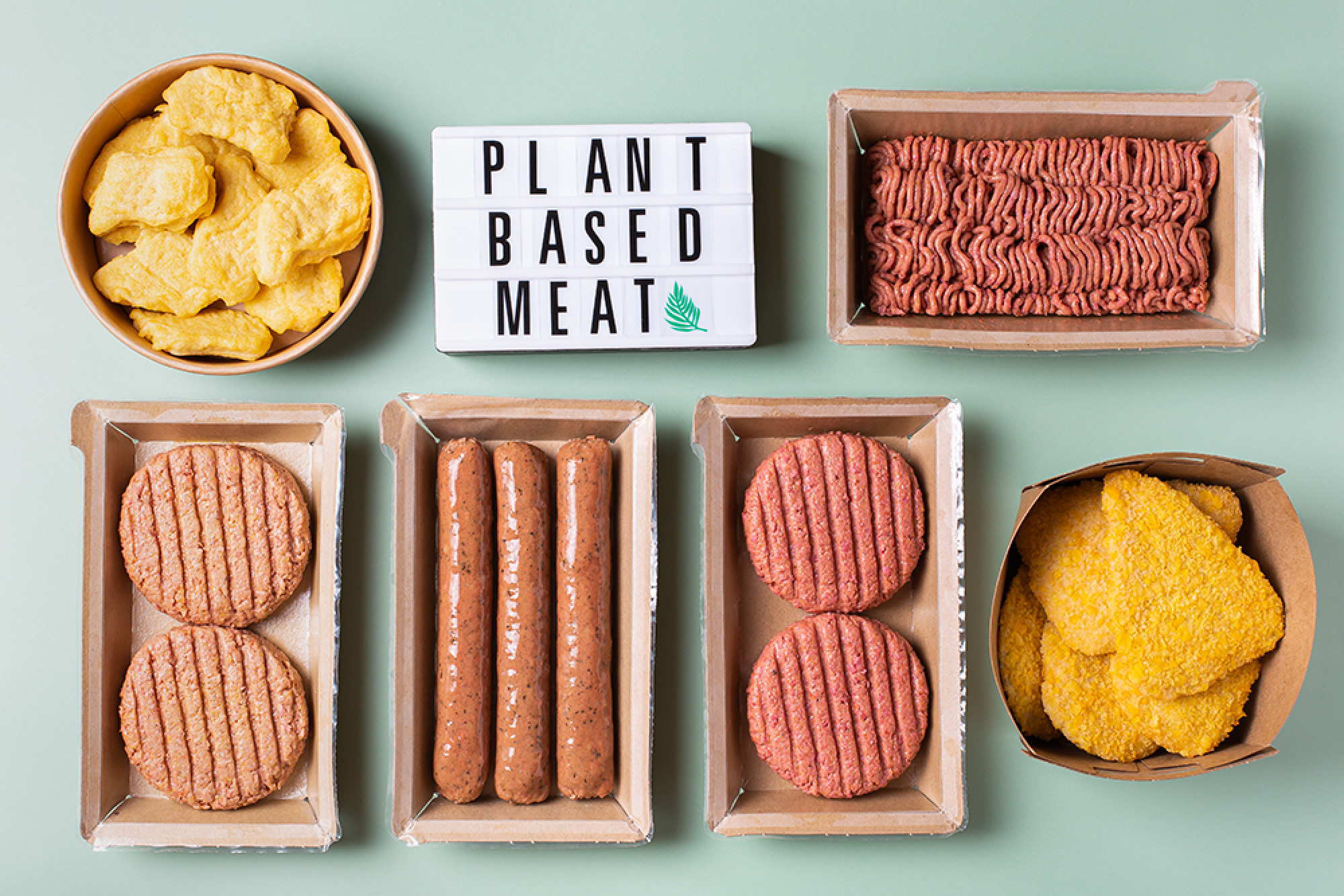
Plant-based manufacturing is a field where new ideas and sustainability meet. As more people seek healthier, greener options, many industries are changing how they operate. This approach is not just about swapping out ingredients. It also means rethinking how products are made, what technology is used, and how companies connect with consumers. These changes bring both challenges and opportunities. Plant-Based Dairy Alternatives: Innovations and ChallengesRead More: Plant-Based Manufacturing in Dairy The dairy industry is changing as more plant-based options become available. It is not just about swapping dairy for plant-based ingredients. Companies are rethinking how they make products, using new technology, partnering with others, and meeting customer needs. The article explores these changes and offers solutions, including the FoodFlow Method by Cibus Nexum.  The Future of Meat Alternatives Read More: Plant-Based Manufacturing: The Future of Meat Alternatives The meat industry is changing quickly as plant-based meat alternatives grow in popularity. Making these products comes with challenges, like choosing the right ingredients, managing production, and meeting customer preferences. Our article explains how companies can handle these issues and highlights the FoodFlow Method, which helps improve efficiency and quality. We show that the challenges in plant-based meat can become opportunities. If you want to learn more about dairy or meat alternatives, the articles below give you insights into plant-based manufacturing. Read More: Plant-Based Manufacturing in Dairy Read More: Plant-Based Manufacturing: The Future of Meat Alternatives 

Private Label Food Manufacturing

Private Label Food Manufac­turing

Private label manufacturing in the food industry has strong potential, but it also comes with challenges. In this article, we’ll highlight the main issues and share practical solutions to help you succeed.Private label manufacturing lets retailers put their own brand on products made by other companies. This gives them control over product development and branding, but they also need to manage supply chains, maintain quality and compliance, and ensure their products meet market demand.Many people think private label manufacturing is easy, but it actually takes careful planning at every step. You need to develop products that fit your brand, manage supply chains, and plan your market launch.We’ll cover common mistakes, explore different ways to approach private label manufacturing, and show how Cibus Nexum’s FoodFlow Method can help you succeed.Join us as we share insights to help you make informed decisions and succeed with private label manufacturing in the food industry.Private Label Manufacturing: Key ChallengesPrivate label manufacturing in the food industry comes with several major challenges. Finding the right manufacturing partner isn’t always easy because you have to balance quality, cost, capabilities, regulations, and scalability. Without a strong B2B network, you may miss key resources, partnerships, and opportunities.Managing your supply chain and production efficiently is key to controlling costs and meeting deadlines. If you fall behind on trends like plant-based or sustainable products, your offerings can quickly lose competitiveness. Careful product development helps you avoid mistakes and ensures proper research and testing.Support from brand owners and a team with different skills are important for successful launches and long-term product sustainability. Ignoring market trends, consumer needs, or packaging can make your product less appealing and hurt your chances in the market.Recognising these challenges early is key to overcoming them. The next sections offer practical solutions to help you build a successful private label business.How the FoodFlow Method Solves Private Label ChallengesCibus Nexum’s FoodFlow Method is a step-by-step process that simplifies private label manufacturing and addresses industry challenges at every stage.The process begins with detailed market analysis and planning to ensure your product matches market trends and consumer demand. Next, we optimise your supply chain by connecting you with top partners to simplify sourcing, improve efficiency, and get your product to market faster. The method also includes strict quality checks and regulatory compliance, especially for sustainability, to keep your product safe and protect your brand’s reputation.During development, FoodFlow encourages innovation, like plant-based options, and offers expert guidance to help your products stand out. You’ll also get targeted support for brand positioning and marketing to help your product succeed on store shelves. Finally, Cibus Nexum’s B2B network connects you with valuable industry contacts and collaboration opportunities to boost your competitive edge.With a holistic, multidisciplinary approach, the FoodFlow Method helps you work more efficiently, increase productivity, and grow your business for the long term. This support makes it easier to handle challenges and achieve lasting success.Cibus Nexum’s Proven Expertise in Private Label ManufacturingCibus Nexum leads in private label food manufacturing, with 75 years of experience focused on efficiency, sustainability, and innovation. Our team creates custom strategies for each client, guiding products from concept through market positioning and supply chain management.We’ve helped create over 500 successful client-supplier partnerships, earning industry recognition for strong results. Our specialists have deep expertise in all areas of private label manufacturing, making Cibus Nexum a trusted partner for your success.Our Services: Solving Your Private Label NeedsCibus Nexum tackles every major challenge in private label food manufacturing with targeted services. We guide product development from concept to compliant production, optimise supply chains for efficient sourcing and delivery, and conduct market research to keep your products aligned with trends and consumer needs. Our team manages quality assurance and compliance, connects you with the right manufacturing partners, and advises on sustainable, eco-friendly options. We also create marketing and branding strategies to help your products stand out, giving you the support you need to succeed in the private label market.Preparation and Planning: Your Foundation for Private Label SuccessCareful preparation and planning are key to private label success. At Cibus Nexum, we begin with a detailed consultation to understand your brand, goals, and target market. Our team researches market trends and consumer preferences to find the best opportunities for you.We help you create a clear product concept, plan your supply chain, and choose the best manufacturing partners for efficiency and cost savings. We set up strong quality control and compliance systems to protect your brand and lower risk. Finally, we develop marketing and launch plans to make sure your product stands out and drives early sales.By preparing each step carefully, Cibus Nexum lays the groundwork for successful private label product launches.Risks of a Non-Specialised Approach in Private Label ManufacturingTaking a generic, one-size-fits-all approach to private label manufacturing is risky. Without expert guidance and tailored strategies, businesses can miss demand, face production delays, pay more, fail to comply, choose the wrong manufacturers, build weak brands, and struggle to grow long-term. Cibus Nexum’s specialised approach helps you avoid these problems by offering expert support and custom solutions at every stage, setting your business up for long-term success.Unlock Your Private Label Success with Cibus NexumPrivate label manufacturing has its challenges and opportunities, but with the right partner, you can unlock your brand’s potential. Cibus Nexum brings over 75 years of experience, tailored solutions, and an innovative, quality-focused approach supported by a strong industry network.Our FoodFlow method supports you at every stage, from research and planning to supply chain management and launch. This ensures your products meet market needs and achieve lasting success. Contact us today to get started.

The Journey from Food Innovation to Production

The Journey from Food Innovation to Production

Turning a new idea into a finished product can be difficult in the food industry.  The first challenge is that of turning a new food product into a form which satisfies market expectations and is compliant with regulations. The second challenge is resource optimisation. Using resources efficiently is essential, but many businesses struggle to allocate them well during development. The third challenge is smooth integration. Coordinating every part of the production process, from research and development to packaging and distribution, can be complex. Cibus Nexum understands these challenges and has developed a method to help food companies move smoothly through each stage. We call this the FoodFlow Method. This approach connects food innovation with practical solutions, so new products don’t just stay ideas but also make it to market successfully.  What is the FoodFlow Method?At Cibus Nexum, we have developed the FoodFlow Method to help solve common problems in food production innovation. This method manages the whole process from concept to consumer, giving each new idea the best chance to succeed in a competitive market. Advantages of the FoodFlow Method: Strategic Development: Ensures your product development aligns with market needs and consumer preferences. Resource Efficiency: Ensures resources are used wisely, with every stage of the product journey optimised for efficiency and effectiveness. Quality Assurance: Carrying out quality control at every stage of the process, from the initial conception through to production, thus making sure that a high-quality end product is made. Market Alignment: Ensures the product is designed with the end consumer in mind, leading to greater market acceptance and success. The FoodFlow Method not only overcomes common problems but also delivers competitive benefits, including shorter time-to-market, higher product quality, and better alignment with consumer expectations. How Does the FoodFlow Method Work? The FoodFlow Method is a step-by-step approach Cibus Nexum uses to guide your product’s development.  For example, in the Design phase, we define your product’s scope and requirements and make sure they match your brand’s values and market needs. We also use our broad network to find manufacturing partners who meet your specific needs. Furthermore, we bring shortlisted candidates on board, hold detailed discussions and negotiations, and build partnerships that fit your business goals. At the final stage, we work with your chosen co-manufacturer to create an action plan for the first production run and a successful product launch. Each stage of the FoodFlow Method strengthens the whole process. To learn how this method can help your project and see the full process, visit our FoodFlow Method page. Why Can Cibus Nexum Help Food Innovators Like You? At Cibus Nexum, we don't just act as consultants. We serve as connectors, enablers, and executors in food production. Our core expertise in sourcing and manufacturing is strengthened by 75+ years of combined experience and the network we have built as a result.  Our direct connections let us quickly connect you with the right people and make turning your idea into a product smoother. We also work with trusted partners in R&D, regulations, and supply chain management to strengthen our services. We never use a one-size-fits-all approach. With the FoodFlow Method, we combine our expertise and network to solve your unique challenges. Whether you need help with your first idea or large-scale production, we bring in the right experts to create solutions that fit your brand and market. Solving Food Innovations Challenges with Cibus Nexum’s Services Challenge: Scaling production Our manufacturing matchmaking services and network connections provide the resources needed to scale without sacrificing quality or efficiency. Challenge: Guaranteeing product quality Through our thorough sourcing solutions, we ensure you use the best ingredients and materials, helping you maintain your high standards. Challenge: Market alignment We create tailored manufacturing strategies based on a deep understanding of market trends and consumer demands, so your product is well positioned to succeed. Challenge: Time-to-Market Using our expertise and network, we help food companies and innovators like you accelerate the process from development to production and greatly reduce the time it takes to launch a product Cibus Nexum’s Specialised Advantage Choosing Cibus Nexum’s specialised approach means using a method designed for the food production industry. The FoodFlow Method reduces risk by providing a custom solution, ensuring your product is developed and launched with the expertise, care, and planning it deserves. The FoodFlow Method of Cibus Nexum not only helps you avoid risks but also enables you to discover new ways of succeeding in the competitive field of food innovation. Partner with Us for Your Food Production Breakthrough Are you ready for Cibus Nexum to help turn your food ideas into successful products? We have the expertise, network, and custom strategies to bring your vision to life. Don’t let the challenges of food production hold you back. Contact us to see how we can give your food product innovation the attention and expertise it needs. Connect with Cibus Nexum today and take the next step on your food innovation journey.

How to Vet a Plant-Based Co-Manufacturer: 5 Essential Checks Before You Scale

How to Vet a Plant-Based Co-Man­u­fac­tur­er: 5 Es­sen­tial Checks Be­fore You Scale

Vetting a plant-based co-manufacturer is critical for scaling an alternative protein brand. As the industry grows, selecting the right partner is essential. Brands that rush through this process often encounter quality or supply issues that jeopardise food safety, product consistency, and brand reputation. Selecting a co-manufacturer is not just about production capability. Your partner must deliver consistent quality, scale capacity as needed, and comply with all industry regulations and retailer standards. A poor choice can result in delays, lost listings, or costly reformulations. This guide outlines how to vet a plant-based co-manufacturer to support your brand’s growth. Following these steps will help you onboard retailers faster, reduce recall risks, and build a resilient supply chain. 1. Check Their Equipment and Processes Truly Fit Your Product Not all plant-based manufacturing experience is equal. Go beyond general claims by having detailed discussions with potential manufacturers. Ask about the specific equipment they will use and whether their extruder screw configuration is suitable for your formulation. Ask about their approach to protein variability and compare their throughput and efficiency with those of similar products. If there is a mismatch, you may face inconsistent texture, reduced yield, high waste, or production downtime. Request evidence, such as production records, trial reports, or client references for plant-based SKUs. Reviewing this documentation will confirm whether they can meet your needs. 2. Assess the Strength of Their Quality and Food Safety Systems During scale-up, small issues can quickly escalate. Carefully evaluate the maturity of a potential partner’s quality and food safety systems, which are critical for regulatory compliance and retailer acceptance. Do not rely solely on certificates. Ask them to explain their HACCP practices, allergen management, ingredient traceability, and deviation management. Review their audit history and request audit reports, allergen control logs, traceability records, corrective action reports, and cleaning validation documents. The depth, accuracy, and speed of their responses will reveal the true strength of their systems. If documentation is slow or incomplete during vetting, it is unlikely to improve later. In plant-based manufacturing, documentation is not just administrative. It underpins product safety, regulatory compliance, and market access. By clearly stating your documentation expectations upfront, you set the standard for your co-manufacturing partners and reduce the risk of regulatory or compliance issues later. Retailers often value documentation as much as the product itself. Once you’re confident in their paperwork, you need to be equally confident in their ability to deliver at scale. 3. Verify That the Manufacturer Has Real Capacity When assessing manufacturing capacity, be direct. Ask about current utilisation, available production shifts, and how they would handle a sudden increase in volume. Identify existing production bottlenecks.  Watch for warning signs such as vague promises to make space, unclear changeover times, or the absence of a realistic trial schedule. Successful scale-up depends on real, measurable capacity, not optimistic assurances. Even if capacity and systems look strong, your contract is where risk is truly defined and managed. 4. Review Contracts to Protect Your Brand and Allow Flexibility Outsourcing should be viewed as a partnership rather than a simple transaction. When discussing the commercial structure of your co-manufacturing agreement, clarify who owns the production tooling, the boundaries for recipe and intellectual property, contract notice periods, raw material supply commitments, and how price escalation clauses will be handled. A well-structured contract manufacturing agreement lays out all these details and protects both sides from future disputes. 5. Use Independent Vetting to Gain Leverage and Minimise Risk Relying solely on manufacturers' self-assessments limits your options. Independent vetting provides a comparative analysis of contract manufacturers, objective risk assessment, structured scoring, and greater negotiation leverage. Many scale-ups are caught off guard by the complexity of outsourcing plant-based production.  To avoid surprises, be proactive: use detailed contract manufacturer checklists to guide your process and consider engaging external experts or consultants specialising in plant-based manufacturing. This preparation will help you uncover hidden risks, avoid quality issues, and manage complexity with confidence.  Take a moment for a quick self-audit of your plant-based co-manufacturer relationship.  Do you have up-to-date documentation for every product and process with your contract manufacturer?  Are you confident that your manufacturing partner can handle double your current volume without risking product quality, food safety, or timely delivery?  Have you clearly defined exit terms and ownership for all intellectual property and production tooling in your contracts? Address gaps before scaling your plant-based production. We at Cibus Nexum can help you. Cibus Nexum is your independent food outsourcing partner. We match your brand with co‑manufacturers that fit your needs, budget, and growth plans. With over 75 years of combined experience, we help brands scale faster, reduce time to market, cut production costs, and maintain consistent quality.  Acting early saves time, money, and headaches.  Scaling in 2026? If you are preparing to scale your plant-based production, consider: Have you thoroughly vetted your co-manufacturer, or simply accepted a convenient agreement? If you have urgent questions or need tailored advice for your plant-based scale-up, contact us for a direct consultation. We are ready to provide specific guidance to support your decision-making. Next Steps 👉 Read our previous article on building a plant-based outsourcing roadmap👉 Or meet us at Plant FWD to discuss your manufacturing strategy in person 

Call me back?
Arjen van der Wijk
close

Call me back request

One moment please...