







How Does Cibus Nexum Help Food Brands?
Scaling a new food product from pilot to full production is challenging for food brands. Cibus Nexum is your independent partner, offering upscaling expertise and a strong manufacturing network. We address risks quickly, guide you to market launch, and connect you with partners to convert innovation into investor-ready products.

What are Common Manufacturing Challenges for Food Brands?
Food brands must maintain operational stability, which may slow innovation and hinder rapid adaptation to market shifts. Common challenges include slow time-to-market due to rigid processes, bottlenecks, staff shortages, and the risk of overproduction or waste, especially with fresh products. Scaling new products outside main operations is commonly constrained by equipment and expertise intended for large-scale, standard production. Technical problems can become major obstacles during industrialisation. Regulatory and sustainability changes may require costly production updates, increasing the necessity for agility and strong external partnerships. As a result, many food brands seek advanced solutions and knowledgeable partners to accelerate progress and reduce risk.
How Does Cibus Nexum Help Food Brands?
Cibus Nexum helps food brands move quickly from concept to market by providing expert support in scaling innovation and optimising supply chains. Our approach cuts time-to-market, guides outsourcing and co-manufacturing partnerships, and supports regulatory and sustainability needs. We connect R&D with industrialisation, giving brands the tools and network to reduce risk and speed up success.
Services and Solutions for Food Brands
Cibus Nexum advances products from concept to market with tailored services. We assist with contract manufacturer selection, business development, and sales. Our services include innovation support through Proxy Foods' AI and consulting on strategy, industrialisation, and supply chain management. Each is customised for efficient progress.
Cibus Nexum typically starts with a discovery call to understand a company's needs and objectives. We then develop a detailed project plan with clear deliverables and timelines. For instance, within a few weeks, clients may receive a shortlist of potential manufacturing partners, an industrial risk assessment, or a go-to-market roadmap. This transparent process ensures ongoing communication and alignment with organisational goals.
Asset-Light Scaling & Venture Building for Food Brands
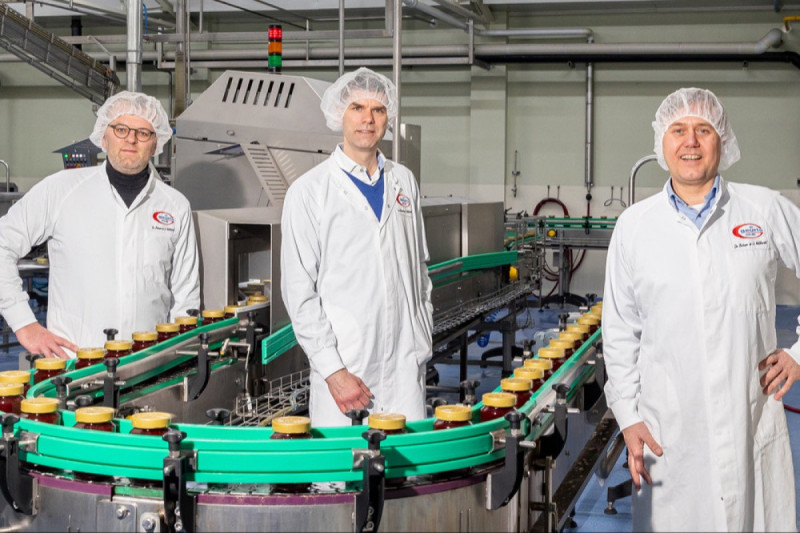
Cibus Nexum leverages agile, entrepreneurial methods to help food brands efficiently scale food innovations. Priority is given to asset-light upscaling, facilitating make-or-buy decisions, and utilising external and co-manufacturing partners for optimal capital use and flexibility. The independent approach includes risk-managed pilot trials, advanced intellectual property protection such as incognito scouting and split-processing, and robust contracts to safeguard innovations. Through the FoodFlow Method, time-to-market is accelerated, stage-gate processes are streamlined, and technical and commercial risks are addressed. This allows for progression from the laboratory to market in 6 to 9 months. By aligning manufacturing strategy with long-term objectives, Cibus Nexum enables new expansion opportunities and supports sustained industry leadership.
Co-Manufacturer Scouting and Outsourcing for Food Brands
Cibus Nexum supports food brands in managing complex co-manufacturing and outsourcing projects as an independent partner with substantial technical and operational expertise. We assist internal teams, optimise project management, and connect R&D with industrial execution, particularly when resources are constrained. Protecting brand and intellectual property is a core priority, employing incognito scouting, phased disclosure, and robust contracts, including black-box and split-processing models. Outsource & Benchmark projects facilitate the selection of optimal manufacturing partners, cost assumption reviews, and the delivery of thorough cost analyses for informed decision-making. For established outsourcing brands, Cibus Nexum also identifies efficiency improvements and cost-reduction opportunities.
Sales as a Service / Business Development for Food Brands
Cibus Nexum assists established food brands in identifying new revenue streams and maximising asset utilisation by converting idle capacity and underused resources into profit centres. We facilitate connections between corporates and high-growth startups launching new products, addressing production surpluses and transforming secondary streams into valuable outputs, as demonstrated in engagements with Danone. As part of the business development team, we leverage an international network to drive B2B growth, support market entry (for example, into Germany), and develop compelling commercial narratives. Expertise extends to license manufacturing and joint ventures, enabling producers to broaden reach and utilise capacity through integrated models and split-processing partnerships. In addition, AI-driven demand forecasting aligns plant capacity with market needs, reducing waste. This approach helps to optimise assets and achieve profitable growth.
Innovation as a Service - powered by Proxy Foods
Cibus Nexum collaborates with Proxy Foods' AI platform to deliver Innovation-as-a-Service, enabling corporate brand producers to speed up R&D, overcome innovation barriers, and lower industrialisation risks. Leveraging both extensive scaling experience and advanced AI, market opportunities are quickly identified, concepts are transformed into comprehensive, compliant briefs, and actionable market insights are provided. The platform automates complex R&D processes, generates pilot-ready prototypes within days, shortens formulation cycles, and ensures regulatory compliance across regions. Specialised AI tools enable functional development, simulate industrial processes, and address scale-up challenges. Data-driven capabilities support ingredient substitutions and cost management, enabling up to 20% cost reductions while preserving product quality. This AI-enabled approach empowers food brands to innovate and launch new products efficiently, with fewer trials, reduced risk, and higher consumer acceptance.
Valorisation Projects for Food Brands
Cibus Nexum helps food brands convert side streams and by-products into valuable ingredients, integrating circular processing into both cost management and sustainability initiatives. We collaborate with companies to identify underutilised resources, improve forecasting, and transform waste into valuable products, as demonstrated through projects with Danone. AI-driven forecasting reduces waste and aligns production with real-time demand, minimising lost sales and excess inventory. Industrial process optimisation decreases technical waste during scale-up, increases yields, and enables the development of waste-to-value solutions, such as packaging from agricultural by-products. Operational bottlenecks that contribute to waste and higher energy consumption are addressed, ensuring that scaling efforts deliver optimal results. This method delivers both environmental and financial advantages to food brands.
Consulting for Food Brands
Cibus Nexum offers strategic consulting to help food brands turn R&D ideas into large-scale industrial success. We focus on getting products to market faster and making smart manufacturing choices that protect your business. We bridge the gap between lab research and real production by testing innovations at scale, identifying bottlenecks, and guiding recipe or process changes. Our consulting ensures you meet new regulations and aligns with your company's stage-gate models, giving you the data you need to decide which ideas to move forward. One key service is our Make-or-Buy assessment, which helps you compare internal investment with using external partners. We often suggest an asset-light approach for greater flexibility and lower upfront costs. Still, we also consider hybrid options, such as manufacturing sensitive parts in-house and outsourcing the rest. We benchmark partners on efficiency to ensure your strategy supports long-term growth and resilience.
Case Studies: Real-World Impact of Cibus Nexum
Cibus Nexum's expertise is demonstrated through real-world case studies that showcase how our independent guidance, technical skills, and strategic approach deliver results for corporate brand producers.
Cibus Nexum works with several established global players and corporate brand producers, providing case studies which demonstrate strategic profit transformation, innovative licensing models, and supply chain optimisation. Key corporate case studies include:
- Danone | Strategic Profit Transformation: Cibus Nexum assisted Danone in transforming its dairy cream production into a strategic profit driver.
- Good Good | launch of their low carb peanut butter in USA, made in Holland ! https://cibusnexum.com/blog/case-study-how-good-good-scaled-their-low-carb-peanut-butter-line-with-cibus-nexum
- Cargill (Network and Candidate Utilisation): Cibus Nexum collaborated with Cargill to leverage its broad network to deliver an organised, agile project. Cibus Nexum was responsible for identifying and contacting potential candidates once specific corporate objectives were clearly defined.
In addition to these specific examples, Cibus Nexum has worked with several other major established food brands, including Jacobs Douwe Egberts, Kraft Heinz, and FrieslandCampina, for whom we have managed various outsourcing, co-manufacturing, and supply chain execution projects. Their work for these corporate brands often involves "Make or Buy" assessments and navigating "future core" innovations that large internal corporate structures may find difficult to scale rapidly.
Frequently Asked Questions:
How does Cibus Nexum ensure a good balance between quality and cost?
We prioritize both quality and cost-effectiveness. By default and oru DNA, we pursue asset-light solutions, which on itself is already reducing capex pressure. Our extensive experience and network allow us to identify and collaborate with suppliers who meet high-quality standards while also offering competitive pricing.
How does Cibus Nexum handle intellectual property and confidentiality concerns?
We adhere to strict confidentiality agreements and ensure that intellectual property rights are respected and protected throughout our collaboration.
How does Cibus Nexum ensure the alignment of outsourcing partners with our company's market interests and values?
We conduct thorough research to understand your market interests and values, ensuring that any outsourcing partnership we recommend is fully aligned with your company's ethos.
Does Cibus Nexum act like an agent?
We are an independent consultancy managing End-to-End projects for our client, which may also include targeting, approaching, screening and onboarding manufacturers and client prospects. Also relying on our personal network and our own sophisticated tooling, we value our independent position in the market. In both cases, we will ultimately deliver a shortlist of validated and screened potential partners, and these companies will be connected directly to our client after NDA and clarification meetings. For such projects we work on project fee or retainer based fee.
There is one specific exception on this: we can act like an agent, but only in the case of specific export projects, where we operate exclusively for brands and manufacturers.
At what stage can Cibus Nexum become involved?
The sooner the better !
We can become involved from the early innovation stage through to industrialisation and commercial growth. This can include feasibility assessment, recipe and process development, pilot trials, manufacturer searches, production scale-up, process validation, shelf-life testing, commercial negotiations, business development and market expansion.
How is Cibus Nexum different from a traditional consultancy?
We combine strategic advice with practical implementation. Rather than only delivering recommendations, we can actively support technology assessment, manufacturing partner searches, trials, scale-up, negotiations and business development. As an independent partner, we are not tied to specific manufacturers, technologies or suppliers and can therefore focus on what best supports the client's objectives.
How do you select manufacturing and technology partners?
We start with the requirements of the product, process, market and (future) business model. We then assess potential partners based on success factors such as technological capabilities, capacity, quality systems, scalability, commercial fit, confidentiality, market interests and strategic alignment. The objective is not simply to find available production capacity, but to identify a partner capable of supporting sustainable growth.
How do you help protect intellectual property when working with external partners?
IP protection is considered throughout partner selection, development and scale-up. Depending on the project, this can include confidentiality agreements, controlled information sharing, compartmentalisation of know-how, contractual protection and careful management of recipes, processing parameters and proprietary technologies. The appropriate approach depends on where the competitive advantage resides within the product or process.
What is AI-powered Innovation as a Service?
Since early 2026 we are one of the exclusive resellers of this amazing piece of work in Europe: Proxy Foods!
Supporting our clients with their innovations, this platform will be a great opportunity and leverage in their R&D projects.This mind-blowing platform combines food industry expertise with AI-assisted research, opportunity identification and innovation development. It can help companies explore technologies, ingredients, products, markets and manufacturing possibilities more efficiently, while human industry expertise remains essential for evaluating technical feasibility and commercial relevance.
How can Cibus Nexum help us find the right co-manufacturer?
We translate your product and business requirements into a manufacturing profile and identify potential partners based on technology, capacity, certifications, volumes, geography, commercial fit and growth potential. We can also support discussions, confidentiality arrangements, trials, scale-up and negotiations.
For more information: take a good look at our FoodFlow (R) method !
Why would an established food company outsource innovation or production?
Outsourcing can provide access to specialised technology, additional capacity and new product categories without requiring major capital investment. In some cases multinationals do ont have the production assets to produce the new products, or the quantities are too low in the beginning. It can also allow companies to explore opportunities faster and reduce the risk associated with investing in manufacturing assets.
Can Cibus Nexum help us identify technologies or production capabilities outside our existing network?
Yes. We can search beyond existing supplier and manufacturing relationships to identify technologies, specialists and production partners that match specific innovation objectives. Our independent position allows us to evaluate options without being tied to particular suppliers or technologies.
How can asset-light innovation complement our existing manufacturing footprint?
Asset-light approaches do not necessarily replace internal manufacturing. They can complement existing factories when new products require different technologies, when internal capacity is limited or when demand is initially uncertain. This allows companies to test and scale opportunities before deciding whether future internal investment is justified.
Can you support confidential or strategic innovation projects?
Yes. Confidentiality and controlled information sharing are integral to our work. Projects can be structured so sensitive product, technology and strategic information is disclosed only where necessary, supported by appropriate confidentiality arrangements.
For instance, we have been involved in top-secret make-or-buy assessments at various mulitinationals.
How do you ensure external manufacturing partners align with our commercial interests?
Technical capability is only one part of partner selection. We also consider customer relationships, competing products, market activities, strategic priorities, ownership, capacity commitments and potential conflicts of interest. This helps reduce the risk of choosing a technically capable partner whose commercial interests do not align with yours.
Can Cibus Nexum help accelerate innovation pipelines?
Yes. We can supplement internal innovation resources through targeted technology searches, manufacturing feasibility assessments, external partner identification, venture / scale-up support and rapid prototyping. This can allow internal teams to explore more opportunities without proportionally increasing fixed resources.
Can you help with technologies we do not currently have in-house?
Yes. This is one of the main advantages of an external innovation ecosystem. We can help identify companies with relevant processing capabilities, specialist knowledge or technologies and assess how these could be integrated into your innovation strategy.
How does AI-powered Innovation as a Service fit within corporate R&D?
It can complement existing R&D and innovation teams by accelerating research, technology scanning, opportunity identification and structured exploration. We combine AI capabilities with food industry knowledge so findings can be filtered for technical feasibility, manufacturing relevance and commercial potential.
Can you support production transfer or alternative sourcing projects?
Yes. We can support companies looking to transfer production, create additional manufacturing capacity, benchmark their current production setup, reduce supply risk or identify alternative production partners. This can include technical assessment, partner search, trials, process transfer, validation and implementation support.
Do you only work on innovation, or can you support commercial growth as well?
We support both. Innovation, manufacturing and commercialisation are closely connected. Our business development activities can help companies identify strategic partnerships, new markets, customers, channels and commercial opportunities around existing or newly developed capabilities.
What is the FoodFlow® Method?
The FoodFlow® Method is Cibus Nexum's structured approach for developing a contract manufacturing setup and bringing it through to commercial launch. It guides a project through four connected phases: Design, Find, Onboard and Launch.
The process starts by defining the product, packaging, supply-chain and manufacturing requirements, continues with identifying and validating suitable co-manufacturers, and then moves through technical and commercial onboarding toward an operational manufacturing setup and first production run. The method is structured, but it can be adapted to the specific needs of the project.
Ready to Scale Up?
Get in touch to discuss your scaling and outsourcing needs. Once you contact us, our team will quickly set up a discovery call. During the call, we'll talk about your goals, challenges, and plans. After that, we'll assess your needs and recommend the following steps, including a tailored action plan or proposal. This transparent process helps you understand the following steps and ensures you have all the information needed to make an informed decision.













Call me back request